
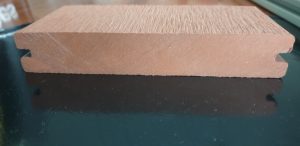
Wood Plastic Composite (WPC) is the product of combining up to 90% recycled wood fiber, plastic (Traditionally PVC) and filler material, in some cases with some type of binding agent and in others without added binder . WPC looks very much like natural wood, it is a very versatile product and is
commonly used in flooring, screening, furniture, retaining walls and so on. Can be made from mostly recycled products and working with WPC is very much like working with natural wood. Generally, WPC has the added benefit of being less likely to split, delaminate or be attacked by termites, it can also be engineered to be lighter weight for easier handling and have a fire rating.
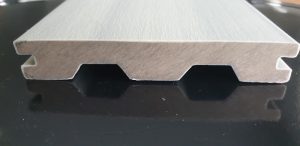
Capped Composite is made from up to 90% recycled materials. Its structure comprises of a composite inner core (mostly wood pulp and plastic) which is co-extruded with an outer polymer capped shell. The ‘Capped Stock’ outer core polymer used can very between brands predominantly polypropylene and high-density polyethylene (HDPE) are used. The performance claims made by individual manufacturers is basically dependent on the polymer type used on the outer shell, generally it is touted as having better wear properties, improved UV resistance, stain resistant and structurally more stable than conventional WPC Composites.
Although many composites are formulated to be fade, scratch, and stain resistant, the individual constituents of the composite are not immune to the effects of the harsh Australian climate and extremes of heat, water, and high levels of UV radiation. Wood Plastic Composite (WPC) composition can be susceptible to UV degradation from exposure to sunlight, swelling due to absorption of water through cut ends, wearing out in high trafficable areas, excessive expansion, and contraction due to extreme temperature fluctuations, can become slippery, just like timber will retain pollutants such as tree sap dust and dirt from the environment. Principle raw materials used to make composites such as, wood pulp and binders, are also prone to weathering, and attack from bacteria, fungus, mould etc. therefore, although composite wood may be somewhat more resistant than other materials, it will still require some level of maintenance and up-keep. Our recommendation is to wash/condition WPC with Aqualis Composite Bright (refer to label instructions) and seal with Aqualis Composite Sealer (refer to label instructions). Wash composite Sealed surface periodically with Aqualis Deck Bright to help protect and extend its serviceable life.
Like all floor surfaces, composites are not immune to build up of dirt and grime, food and drink stains, oil, microbial (mould and fungal) attack, residues from pollution, environmental surroundings which include tree sap, salt deposition in coastal areas, abrasion from sand, etc. It is important to keep these surfaces clean and free from such contaminants. The choice of cleaner is vital to ensure the surface of the composite is not compromised in any way, we recommend an intermittent wash with Aqualis Deck Bright (refer to label instructions).
Composite Wood does not deteriorate like natural timber, it does not become grey but often fades to a washed-out shade of its original colour giving a plastic-like or synthetic appearance. The rate of deterioration will be subject to brand of composite used, geographical location, level of exterior exposure to weather elements such as sun wind and rain, level and frequency of foot traffic, degree of wear and tear due to abrasive materials such as sand and sea salt, time allowed for dirt and grime to lock in and concentrate microbial degradation and poor construction methods for example poor ventilation and so on. We recommend that Wood Plastic Composites (WPC) should be treated with Aqualis Composite Bright and sealed with Aqualis Composite Sealer. Sealed surfaces should be periodically washed using Aqualis Deck Bright to help protect and extend serviceable life. (Refer to all technical data or labelled instructions)
Generally there are two main types of composites used for decking in Australia, Wood Plastic Composite (WPC) and Capped Composite (Capped Stock Composite).
WPC is the product of combining up to 90 % recycled products which include wood fiber, plastic (traditionally PVC) and filler material, in some cases with some type of binding agent and in others without added binder. The resulting ‘Wood Plastic Composite’ is usually denser, stronger, and heavier than most common species of natural wood.
Capped Composite is also made from up to 90% recycled materials. Its structure comprises of a composite inner core which is co-extruded with an outer polymer capped shell. The ‘Capped Stock’ outer core polymer used can very between brands, Polypropylene and High-Density Polyethylene (HDPE) are amongst common types used.
Before sealing your composite, it is important to identify what type of composite it is. WPC Composite or Capped Composite? (Refer to Aqualis Web site for more detail)
Yes, most WPC Composites (wood plastic composite) can be sealed simply by washing/treating the surface with Aqualis Composite Bright (follow label instructions) then sealing with Aqualis Composite Sealer (follow label instructions).
No, generally Capped Composite cannot be sealed.
Note, with so many suppliers of composite flooring in the market, and the multitude of formulations in circulation, it’s always advised that pre-testing for adhesion be undertaken to ensure the desired product performance is achievable.
No.
Adhesion of sealer to the Capped Composite depends on the polymer used for the encapsulating layer.
Most Capped Composites cannot be sealed because at present, commonly used encapsulating polymers are high density polypropylene (HDPE) and polypropylene both of which are notoriously difficult to achieve adhesion of any coating unless the surface has been pretreated in some way, for example with plasma, flame or chemically.
Note, with so many suppliers of composite flooring in the market, and the multitude of formulations in circulation, it’s always advised that pre-testing for adhesion be undertaken to ensure the desired product performance is achievable.
Yes, faded WPC Composite can be successfully restored by wash/treating with Aqualis Composite Bright followed by colour restoration using coloured Composite Sealer. Composite Sealer is available in clear and a range of colours
No.
Depending on the age of the composite and the degree of wear of the surface it can be quite difficult, and sometimes impossible to remove old stains without bleaching out the colour or irreparably damaging the composite.
Harsh industrial grade detergents, bleach or chemicals can damage the surface of the composite and what started off as a small stain can end up much worse. Never using High pressure water jet to blast dirt and stains off composite surfaces.
Always ask the supplier of your composite what is recommended for removal of stains on their product.
It’s advisable to remove stains as soon as possible to minimise long term damage.
We recommend using a diluted solution of Aqualis Deck Bright for general cleaning or a diluted solution of Aqualis Composite Bright (only suited for use on unsealed decks) for difficult stains.
We recommend sealing your composite using Aqualis Composite Sealer to minimise and avoid problem staining.
Yes, existing coatings or paint can be removed from composite decking using Aqualis Strip Ease, ensure to wear appropriate protective clothing including safety goggles. If sealing is required with coloured Composite Sealer, you may lightly sand surface in the direction of the grain to remove any paint contamination. (Consult Composite Manufacturer to avoid warranty breaches, follow all label instructions and always pre-test a small patch before progressing to larger areas).
Never use strong solvents like paint thinners, acetone, or industrial grade paint stripper as this can damage the surface of the composite. Never use high pressure water jet to blast old paint or coatings off composite this can permanently damage the surface.
Yes, WPC composites can be carefully sanded to remove minor surface defects and superficial stains or contaminants such as paint, however, always follow manufacturer’s recommendations to avoid any warranty breaches.
No, Capped Composites should never be sanded, refer to manufacturer’s advice for maintenance and cleaning recommendations.
Microbial growth occurs or is encouraged if there is a build-up of debris and organic matter from plants (foliage, fruit, bark etc.), accumulation of dirt, dust, phosphate pollutants from rain, poor drainage, poor ventilation, presence of high levels of moisture. If the surface is weathered and has
become porous, fungal spores will become embedded and difficult to wash away or kill hence resulting in frequent mould bloom especially in areas subject to dampness and poor ventilation. It is important to keep composites clean, wash as required using Aqualis Deck Bright. Once the surface has been thoroughly cleaned and is free from microbial growth, allow to dry out thoroughly then treat with Aqualis No Fungal Pro (follow label instructions). Once No Fungal Pro has dried off, we recommend sealing with Aqualis Composite Sealer making the surface impervious to water once again and resistant to mould growth. (Mould prone areas need to be kept clean and maintained to prevent or slow down any regrowth. Dampness or excessive moisture needs to be addressed as a possible underlining issue for regrowth of mould or algae.)
Wash treatment with Aqualis Composite Bright and allow to dry thoroughly. If colour restoration is required, restore colour using desired Aqualis Composite Sealer colour and allow to dry overnight then apply two coats of Aqualis Traction to achieve either P4 or P5 slip rating. If no colour restoration is required apply three coats of Aqualis Traction directly to the wash treated surface.
Note If required, Traction is also available in a limited colour range to enhance colour depth.
Faded WPC Composite can be either restored to original colour or changed if desired using coloured Composite Sealer.
Coloured Sealer is a tinted product and must be thoroughly mixed before use. Final colour varies on the degree of fade from original and discolouration due to ageing/weathering.
It is advisable to do a test sample ensuring the desired colour is achievable or contact Aqualis for technical advice.
Composite Sealer is a water based polymeric emulsion designed to protect Wood Plastic Composites (WPC) against food, oil staining and dirt retention whilst restoring water repellency. It is applied over correctly prepared WPC substrates, worked evenly over the entire surface with lamb’s wool applicator, squeegee mop, brush or roller and allowed to dry off. Composite Sealer is quick and easy to use it is available as a clear and pigmented finish to enhance the beauty of WPC surfaces locking in pigmentation and slowing down the ageing process due to effects of water and UV exposure.
Composite Bright is a water-based composite surface cleaner/conditioner treatment for the application of Composite Sealer. Composite Bright is also suited as a general-purpose composite cleaner to be re-applied on unsealed composites as often as required to maintain a fresh, clean look of all composite decks, stairs, handrails, cladding, screening, furniture etc.
Traction is a polymeric emulsion which has been designed to impart the natural look on WPC Composite substrates and delivers slip resistance. It is designed to provide a full slip resistance P4 and P5 wet pendulum rating as per AS/NZS 4586-2013. Traction can be used as a slip resistant sealer for WPC surfaces and is available in clear or limited colours.
Refresh is a solvent based UV resistant stain designed for use on all internal and external wood and WPC composite surfaces. Refresh exhibits excellent application properties delivering natural looking colour with excellent transparency and light fastness.
Durability of Composite Sealer is dependent on many external factors such as environment, degree of traffic, abrasive sand, etc. Sealed WPC Composites are quite durable. Like all trafficable surfaces monitoring for wear or coating failure is required. Recoating is a simple Deck Bright wash and Composite Sealer re-coat. On average a sealed surface may last 2 – 5 years.
Aqualis Coatings Pty Ltd (ABN: 13 616 962 282)
Aqualis Coatings’ comprehensive range of timber and wood care products are environmentally responsible and give long-lasting performance in the harsh conditions of Australia.
Copyright© Aqualis Coatings Pty Ltd. All rights reserved.